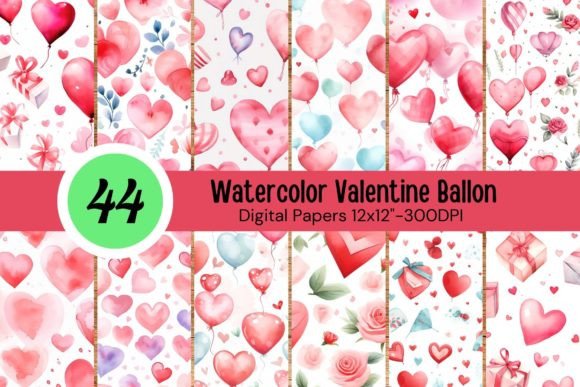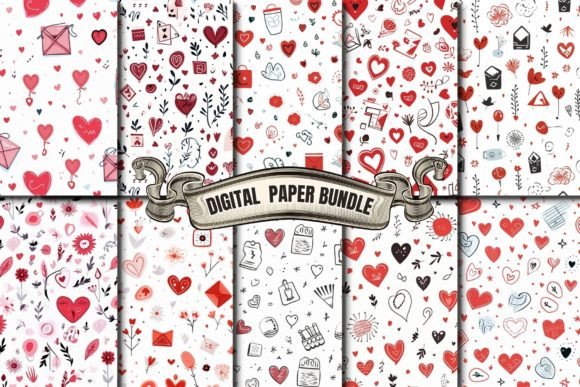
Watercolor Heart Digital Paper: Patterns for Sellers
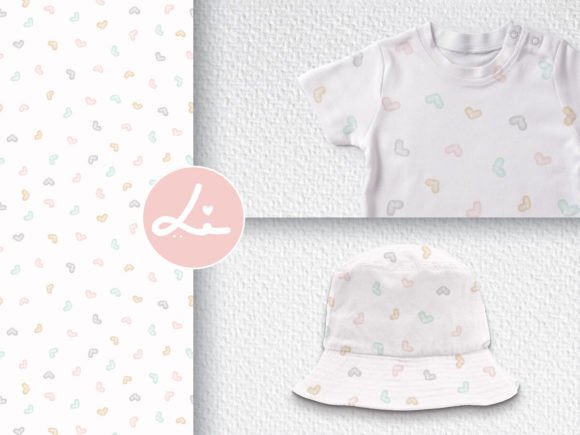
As a digital product creator who manages multiple storefronts across Etsy and Creative Fabrica, my evaluation of any new graphic design asset begins with a simple question: will this actually sell? When I first opened the Watercolor Heart Digital Paper files, I wasn't looking for personal aesthetic preference. I was analyzing market viability. My immediate impression was that this collection strikes a necessary balance between playful nostalgia and commercial versatility. The watercolor texture provides an organic, handmade feel that is currently dominating the wedding, nursery, and Valentine’s Day niches, yet the heart motifs are rendered with enough clarity to avoid looking muddy when scaled down.
For sellers in the creative marketplace, this specific style of patterns offers a distinct advantage. It avoids the sterile look of vector art while maintaining enough definition for print-on-demand applications. The mood is undeniably feminine and romantic, but not overly juvenile. This broadens the potential customer base from crafters making kids' birthday invitations to small business owners designing packaging for luxury skincare or bridal accessories. As a commercial design resource, it feels premium rather than generic, which is essential for justifying higher price points in digital download listings.
Testing Viability Across Product Categories
Before listing any asset in my shop, I run it through a rigorous testing phase to ensure it performs across different mediums. With Watercolor Heart Digital Paper, I focused on three primary revenue streams: printable stationery, sublimation merchandise, and digital templates.
For printable design products like greeting cards and planner stickers, the resolution and color fidelity are paramount. I tested these patterns at 300 DPI on both matte and glossy cardstock. The watercolor edges held up beautifully without pixelation, and the colors remained vibrant after printing. This confirms its suitability for high-quality stationery suites. However, for sticker design, particularly die-cut vinyl stickers intended for Cricut projects, I had to be more selective. While the paper works gorgeously as a background, intricate inner details of smaller hearts can get lost during the cutting process. I recommend using this asset primarily for kiss-cut sticker sheets or as a backing pattern rather than for complex individual cutouts.
In the realm of sublimation design, this digital paper shines on curved surfaces. I applied the pattern to a 20oz tumbler wrap mockup and a ceramic mug design. The seamless nature of the patterns meant there were no visible repeat lines, which is a common failure point for lower-quality assets. The soft gradients of the watercolor illustration translate exceptionally well to polyester coatings, creating a dyed-in-the-fabric look that customers perceive as high-value. For t-shirt design, however, I would advise caution. Watercolor textures can sometimes appear faded on dark garments unless printed with white underbase ink. This asset is best reserved for white or pastel apparel where the delicate brushwork can truly stand out.
Leveraging Assets for Canva Templates and Branding
Beyond physical products, I evaluated this Watercolor Heart Digital Paper as a foundational element for Canva template sellers. Social media graphics and Instagram story templates require backgrounds that add visual interest without competing with text overlays. These patterns provide excellent negative space. I successfully created a suite of promotional visuals for a fictional bakery brand, using the lighter variations of the paper as a backdrop for menu items and sale announcements. The visual hierarchy remained intact because the watercolor washes are subtle enough to support typography rather than overwhelm it.
For small business branding and packaging design, this asset serves as an affordable alternative to custom illustration. I can envision this being used effectively for thank-you cards, tissue paper prints, and shopping bag designs included in handmade business orders. When bundled with coordinating clipart and serif or script font pairings, this digital paper transforms from a simple background into a comprehensive brand identity kit. This bundling strategy significantly increases the perceived value of your Etsy product listings and encourages higher average order values.
Critical Quality Checks Before Publishing
Even the most beautiful patterns can result in returns or negative reviews if technical specifications aren't verified. Based on my experience selling design assets, here are the non-negotiable checks you must perform before adding Watercolor Heart Digital Paper to your inventory:
- Verify Seamless Tiling: Never assume a file is seamless. Create a 2x2 grid test in Photoshop or Procreate to ensure the edges align perfectly. Visible seams destroy trust in digital products.
- Color Profile Consistency: Check if the files are RGB or CMYK. Since this is often used for both screen-based Canva templates and physical print-on-demand items, providing both versions or clearly stating the profile in your listing description prevents customer frustration regarding color shifts.
- Transparency Validation: If the product includes PNG design elements or clipart alongside the papers, zoom in to 400% to check for jagged edges or leftover white halos. Clean transparency is what separates professional commercial design from amateur work.
- Mockup Realism: Test the design on realistic product mockups before creating your listing images. A flat JPEG of a pattern doesn't sell; a photo-realistic preview of that pattern on a nursery wall art frame or a wedding invitation does. Visual storytelling drives click-through rates.
- Licensing Clarity: Always double-check the commercial license terms. Ensure you have the right to use the asset in end products for sale, especially if you are incorporating it into a larger design bundle or a modified template.
Strategic Merchandising and Listing Optimization
How you present Watercolor Heart Digital Paper matters as much as the quality of the file itself. In a saturated creative marketplace, your thumbnail is your handshake. I found that this particular asset performs best when showcased in context rather than in isolation. Instead of a simple square crop of the pattern, create a composite listing image that shows the paper used in a real-world application, such as a scrapbooking kit layout or a digital planner cover.
When writing your product descriptions, focus on the specific problems this asset solves. Don't just list "heart patterns." Instead, describe it as "romantic watercolor backgrounds for Valentine's Day sublimation tumblers" or "soft nursery wall art textures for baby shower invitations." Specificity helps with SEO and connects with buyers who are searching for solutions to their current creative projects. Additionally, consider cross-promoting. If you sell SVG design files or handwritten fonts, link them directly in the listing. Buyers looking for this type of feminine, organic aesthetic are likely building a cohesive project and will appreciate the convenience of matching design assets.
Knowing the Limitations
While versatile, this Watercolor Heart Digital Paper is not a universal solution. Through testing, I identified specific scenarios where this asset should be used carefully. Avoid using these patterns for tiny, detailed sticker cuts on Cricut or Silhouette machines; the watercolor texture lacks the solid fill areas required for clean weeding. Similarly, be cautious when placing white text directly over the darker concentrations of the watercolor wash without a contrasting overlay or shadow, as readability suffers.
Furthermore, if you are targeting a hyper-modern, minimalist tech niche, this aesthetic may feel too traditional. Know your audience. This asset is a powerhouse for weddings, babies, romance, and self-care niches, but it may underperform in corporate B2B or gaming markets. By understanding both the strengths and limitations of this graphic design asset, you can make informed decisions that protect your shop's reputation and maximize your return on investment. Ultimately, successful digital selling isn't about having every asset; it's about knowing exactly how to deploy the right assets for the right market.