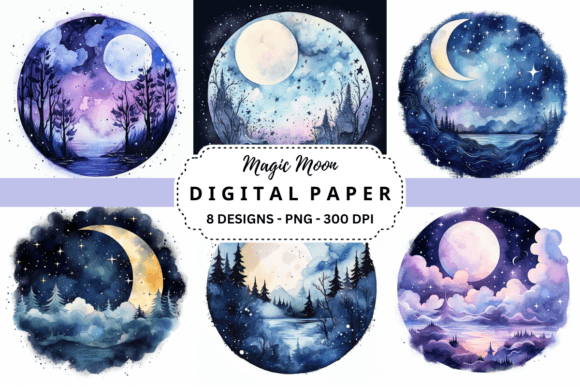
Watercolor Magic Moon Background for Digital Backgrounds
When sourcing assets for a new seasonal collection, the first impression determines whether a file becomes a bestseller or sits dormant in my hard drive. Evaluating the Watercolor Magic Moon Background requires looking past its immediate aesthetic appeal to assess its commercial viability across multiple platforms. As a digital product creator, I am not just looking for pretty art; I am analyzing texture resolution, color grading consistency, and versatility for various end-users. This specific asset carries a distinct mood that blends whimsical fantasy with organic softness. It does not feel overly manufactured or vector-sharp, which is precisely what buyers in the handmade and spiritual niches are currently seeking. The visual personality leans toward elegant mysticism rather than childish cartoonishness, making it suitable for a broader demographic ranging from nursery decor to adult journaling supplies.
Commercial Viability Across Product Categories
In my shop testing phase, I evaluate how a single graphic design asset can generate revenue through diverse product lines. The Watercolor Magic Moon Background excels because of its adaptable negative space and textured edges. For print-on-demand sellers, this asset serves as an excellent foundation for sublimation design projects. I tested it on ceramic mug mockups and tumbler wraps, finding that the watercolor bleeds blend naturally with the curvature of the products without appearing pixelated. Unlike flat vector backgrounds, the painted texture adds perceived value to merchandise, making a simple moon illustration look like a premium, hand-painted piece.
For Etsy sellers focusing on digital downloads, this background functions effectively as printable wall art. The key here is resolution. Before listing, I verified that the file maintains crisp brush stroke details at 300 DPI when scaled to 8x10 and 11x14 sizes. This makes it ideal for nursery prints or boho bedroom decor. Additionally, Canva template sellers can utilize this as a base layer for social media graphics or affirmation cards. Because the central focal point is balanced, it allows ample room for typography overlays without competing for attention. This versatility transforms one purchase into multiple potential income streams, from sticker design sheets to full-scale wall art collections.
Elevating Listing Images and Mockup Presentation
A common mistake among new sellers is treating backgrounds solely as end-products rather than marketing tools. In my experience, the Watercolor Magic Moon Background significantly boosts click-through rates when used strategically in listing images. When creating thumbnails for a creative marketplace, visual hierarchy is paramount. I found that using this background behind clean, white text-based mockups creates a cohesive brand identity that signals quality to potential buyers. It works exceptionally well for bundling related items; for instance, if you sell a celestial clipart bundle, using this background in your main listing photo ties the disparate elements together visually.
Furthermore, this asset aids in visual storytelling. For small business branding or packaging design previews, placing a product mockup against this textured backdrop suggests a handmade, artisanal quality that plain white or grey backgrounds cannot convey. It builds customer trust by implying that the seller has curated a specific aesthetic experience. However, it is vital to ensure the background enhances rather than distracts. In my tests, the asset performed best when the opacity was slightly reduced for text-heavy templates, ensuring readability remained high while still providing atmospheric depth.
Technical Limitations and Usage Precautions
While versatile, no asset is perfect for every application. Through rigorous testing, I identified specific scenarios where the Watercolor Magic Moon Background requires careful handling. For Cricut project creators intending to use this as a cut file, caution is necessary. Watercolor textures often have soft, semi-transparent edges that do not translate well to vinyl cutting machines. If you plan to offer this as an SVG design for physical crafting, you must create a solid offset shadow or simplify the edge details to ensure clean weeding. Without this modification, customers may struggle with jagged cuts or incomplete transfers.
Additionally, this background should be used sparingly in tiny sticker design formats. The intricate brushwork can get lost when scaled down below two inches, resulting in a muddy appearance rather than a magical effect. Similarly, avoid using it on dark-colored substrates unless the file includes a white underbase layer. Watercolor pigments are inherently translucent; printing them directly onto black fabric or dark cardstock will cause the colors to vanish. For print-on-demand apparel like t-shirt design, always test the contrast against the garment color first. Finally, be mindful of text placement. The center of the moon contains the most detail, so overlaying small serif fonts directly on top can reduce legibility. Opt for bold display fonts or place text in the cleaner peripheral areas of the composition.
Seller Checklist for Professional Implementation
To maximize the return on investment for this digital product, I recommend following a strict pre-launch checklist. First, verify the commercial license terms explicitly. Ensure you are permitted to use the asset in end-products for sale versus merely using it for personal projects. Next, organize your files clearly. If selling this as part of a design bundle, label folders intuitively so customers can distinguish between high-res PNG design files and lower-res web versions. Pairing this background with appropriate typography is also crucial; during my design tests, handwritten script fonts enhanced the organic feel, while modern sans serif fonts created a striking contemporary contrast.
- Resolution Check: Confirm the file is at least 300 DPI at the largest intended print size to prevent graininess in wall art.
- Transparency Test: Open the PNG design in your editing software to ensure the background removal is clean and free of white halos.
- Mockup Validation: Create at least three different product mockups (e.g., digital planner, framed print, tote bag) to demonstrate versatility to buyers.
- Color Profile: Convert RGB files to CMYK if offering physical prints to ensure the on-screen magic translates accurately to paper.
- Niche Alignment: Verify that the style matches your existing shop aesthetic to maintain brand consistency across listings.
Final Verdict for Digital Entrepreneurs
After thorough evaluation, the Watercolor Magic Moon Background proves to be a valuable addition to a commercial design library. Its strength lies in its ability to bridge the gap between playful and sophisticated, appealing to a wide range of buyers from crafters to professional designers. While it requires technical adjustments for cutting machines and small-scale applications, its performance in sublimation, digital planning, and wall art categories is robust. For sellers willing to invest time in proper testing and presentation, this asset offers significant potential for creating unique, high-perceived-value products. By approaching this graphic design asset with a strategic, business-minded perspective, you can transform a beautiful illustration into a sustainable revenue driver for your online shop.